From field to file - Not everything that matters can be digitised

Integrated Design • May 11, 2026

After years of working closely with cities and communities, one thing has become increasingly clear: not all knowledge can or should be digitised. Yet much of research and urban planning today proceeds with data that counts when it is documented, cited, and stored in formal systems.
In academic, professional and policy circles, there is a mounting pressure to lean on existing literature, papers reflecting on other papers, temporal datasets, both historical and contemporary can sometimes overshadow the deeply human need for direct, first-hand discovery and innovation. It can limit one’s ability to appreciate the many different layers of reality, where knowledge is validated often when it is written, digitised, and formatted into reports that few beyond “specialists” can fully understand.


What gets left out in this process is the vast body of tacit, lived knowledge held by communities.


Scott (1998) warns against what he calls legibility. The state’s tendency to simplify complex, local realities into standardised, manageable data. In doing so, systems that are rich, adaptive, and deeply contextual are often ignored because they do not fit into neat administrative categories.


This is not theoretical. It is playing out in cities like Ramanagara and Chikkaballapura.


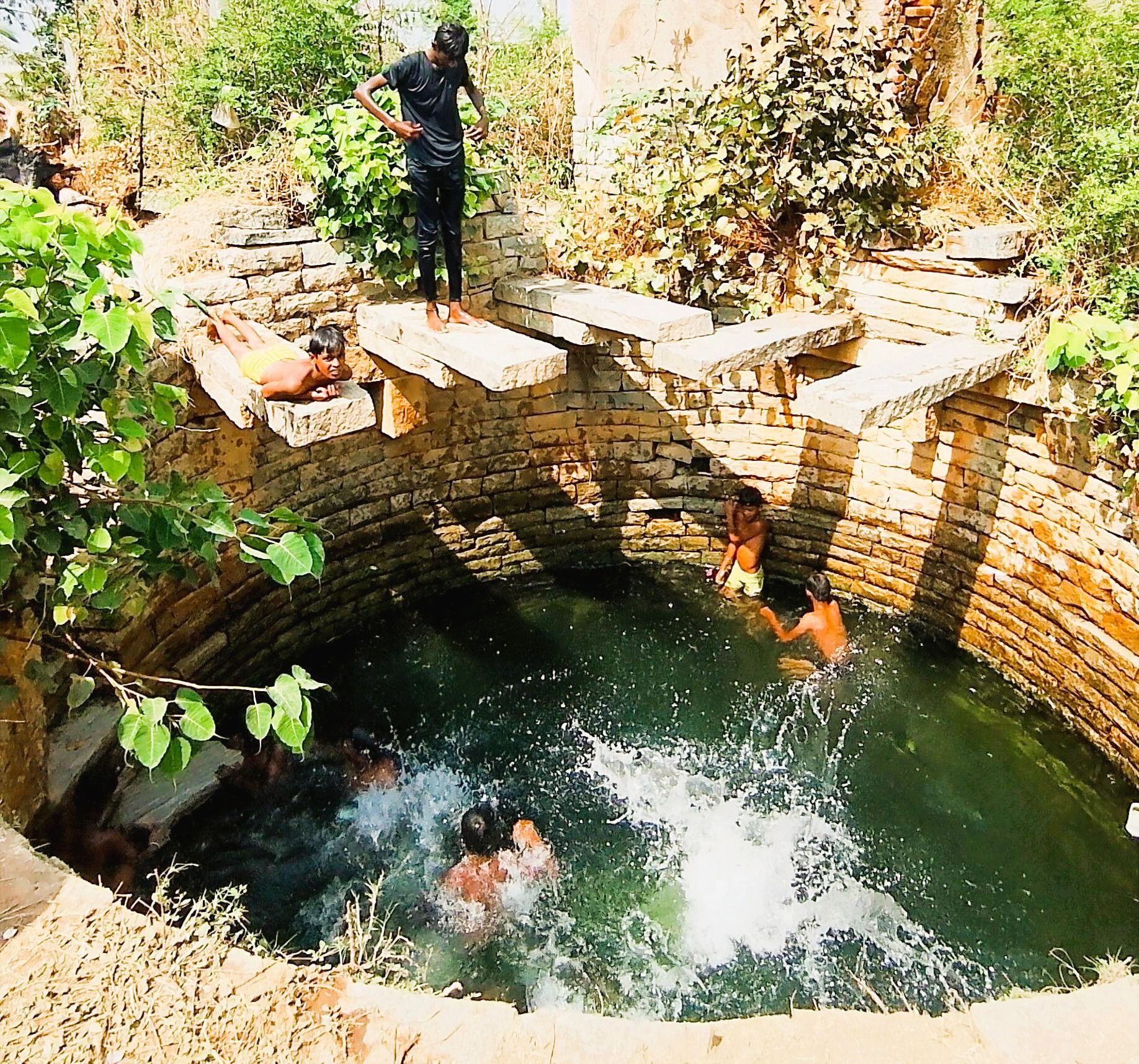
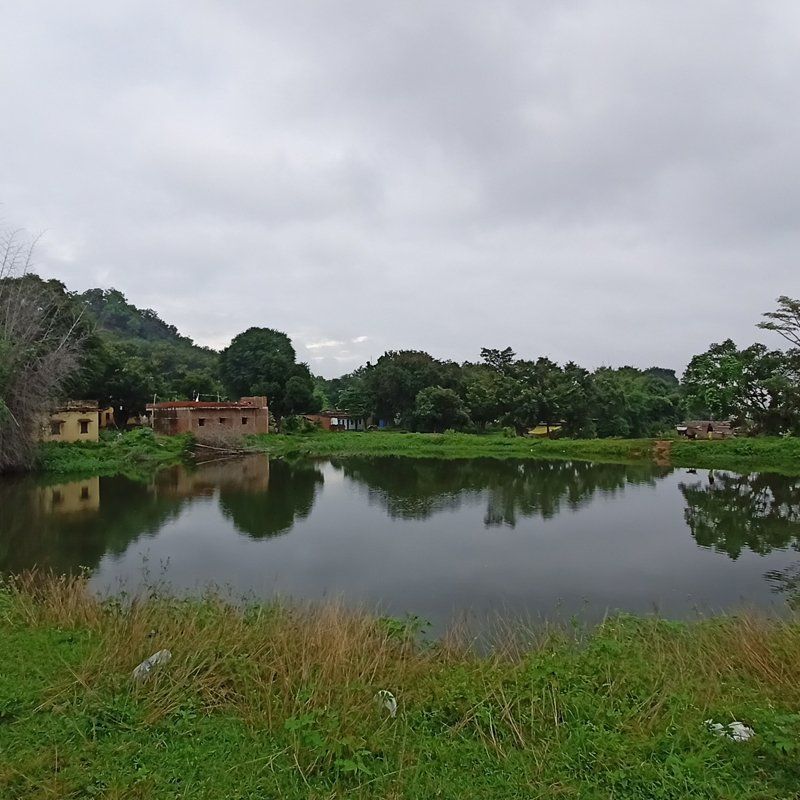
In Ramanagara, while studying water systems around Bolapanahalli kere, I stood at the edge of what any dataset might simply mark as a “water body.” But what unfolded was a living ecosystem. Picturize what I saw: people swimming, a pump house irrigating nearby fields, a farmer recounting stories of his land. On one side stood an abandoned brick kiln; on the other, the steady spread of the town’s built fabric. Further along a mud path, birdlife moved quietly against the backdrop of Ramadevara Betta, while work to strengthen the lake’s bund continued. In a conversation with a young farmer there, one phrase lingered: “e jameen yella namde” (this land belongs to us). “Namde” (ours) did not simply mean ownership. It carried a sense of belonging, belonging of generations who had lived with the land, worked it, and in doing so, become its custodians. Not managers of a resource, but protectors within a relationship that is careful, reciprocal, and deeply rooted.


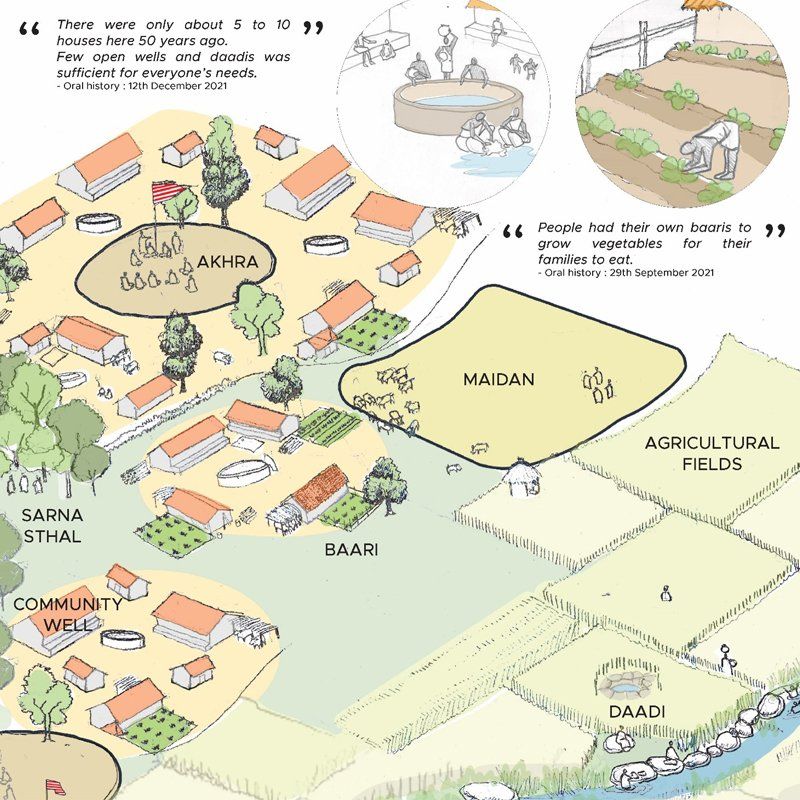
For centuries, such relationships governed natural systems. Communities desilted tanks, shared water, chose crops, and maintained commons. These systems were rarely written down. Referred to as oral histories - these are deeply embedded in memory, practice, and accountability. Roles like that of the neeruganti  (village waterman, who was typically a lower-caste man from the village in charge of water distribution and the maintenance of physical water structures (Somashekara Reddy 2007) ensured equitable water distribution; community norms sustained what policy now tries to regulate. Water was not just a resource; it was a social contract.


And yet, this knowledge rarely enters formal planning.


In another interaction in Ramanagara, two farmers spoke about a well, not as an object, but as a living entity. They described how “she” filled through the day, how she served them, and how they, in turn, existed alongside her in a rhythm that felt organised and mutual. When the same well was reduced to a point in a dataset in a presentation to the municipality, the initial response was that of surprise, leading to several questions - Why were they surprised? What did they see and what had they not seen until now? 


This gap, between what exists and what is recognised lies, at the heart of the problem.


Urban development is increasingly supported by tools such as geospatial mapping and centralised supply systems. While these approaches appear modern and efficient, they often struggle to capture decentralised, lived ecological and cultural systems that continue to exist on the ground, having sustained communities for generations. As cities expand, trees are cut, land is concretised, wells are sealed or built over - leading to an erasure of traditional systems, both physically and from institutional memory. What remains is the associated tacit knowledge - a highly undervalued dataset. In Chikkaballapura, efforts are underway to revive three
kalyanis with government funding. Once restored, these will be documented under the Jal Mission Abhiyan requiring local authorities to create a digital inventory by geo-tagging every water body to prevent them from being lost to future construction or encroachment. While this is a laudable policy intervention, in yet another location, a local community, along with a temple trust have begun reviving a kalyani dating 1902 (Nayak, 2025) that they consider valuable from several dimensions. They are relying on their own resources.  This effort, however, remains unrecognised by the municipality because of a mix of bureaucratic inaction, disputed ownership, and political influence (Nayak, 2025). What happens then to this “unofficial” water body? Without formal acknowledgment, it risks disappearing again, this time not just physically, but from the records that shape future planning.


Elinor Ostrom’s work has shown that communities can sustainably manage shared resources through locally evolved systems of knowledge and governance. These systems do not always translate into formal data, but they work.


The issue, then, is not digitisation itself. Digitisation, mapping, and formal datasets are, while indispensable to contemporary planning, should not be the only lens through which knowledge is recognised. Documentation and data systems are essential, yet their reliance on sources that are formally recognised risk creating dangerous blind spots.


Scott’s distinction between technical knowledge and metis - Practical, experience-based knowledge that is difficult to formalise but crucial for real-world functioning is a useful lens to bring in the community-knowledge.


Long before tools like Google Maps began guiding us, people navigated memory, repetition, and lived experience. Even today, there is a certain clarity in directions sketched by hand. This becomes even more striking in the story of a farmer displaced by urbanisation in Bengaluru. His mental map holds far more than any formal dataset: water bodies, village gatherings, cultural landmarks, from ashwath katte to grazing lands and wells. Though the village has been renamed, these memories persist, unaltered by administrative or digital change.


Treating such knowledge as expendable simply because it is unwritten is a mistake, one that cities can ill afford in the face of growing climate, heat, and environmental stresses.


What is needed is convergence, moving beyond extractive data collection toward participatory knowledge-building. This means working with communities to document assets comprehensively, recognising informal and community-led systems, and creating ethical frameworks for integrating this knowledge into planning. A thorough, participatory “bookkeeping” of urban ecological assets such as wells, stepwells, water bodies, ponds, tree covers, aquifers could transform how plans for resilience can be incorporated in planning for cities. Essentially, this requires a shift in mindset: from seeing people as sources of data to recognising them as holders of knowledge.


If we continue to overlook what cannot be easily digitised, we risk losing not just information, but ways of understanding and sustaining our environments that have evolved over generations.


Bridging this gap does not require abandoning existing systems, it calls for expanding them. For policymakers, and planners this could mean embedding participatory mapping within current GIS workflows, formally recognising community-led stewardships, and creating space within municipal records for locally held knowledge. For practitioners, it means going beyond extraction, working with communities to interpret, validate, and carry forward their knowledge in ways that remain meaningful in both local and formal contexts.


The task, then, is not to choose between digital and lived knowledge, but to build pathways where both can inform each other; so that planning does not begin on paper alone, ensuring what is grounded in what is already known, seen, and lived. 


The way forward is not a single method, but a shift in practice: creating institutional space where participatory knowledge can sit alongside formal datasets, where communities are treated as co-authors of urban information, not just subjects of it. Even small steps, such as integrating local mapping exercises into existing planning workflows can begin to bridge this divide.


References

Ostrom, E. (1990). Governing the commons: The evolution of institutions for collective action. Cambridge University Press.


Scott, J. C. (1998). Seeing like a state: How certain schemes to improve the human condition have failed. Yale University Press.


Somashekara Reddy, S. T. (2007). Water management: The neeruganti way. In S. Iyengar (Ed.), Waternama: A collection of traditional practices for water conservation and management in Karnataka (pp. 15-20). Communication for Development and Learning.


Ashok Nayak (2005). Vishwavani News. (2024, September 16). Attempts to revive the closed ancient Kalyani: Public curiosity piqued. Vishwavani. https://www.vishwavani.news/karnataka/chikkaballapur/attempts-to-revive-the-closed-ancient-kalyani-public-curiosity-piqued-53785.html
By Integrated Design June 14, 2022
Theme: Water Resilience: Fostering integrated approaches at the region, city, and settlement scales
By Networking Session by INDÈ at the Global Gobeshona Conference-2 April 1, 2022
Being a member of the Adaptation Research Alliance, ARA (a global, collaborative effort to increase investment and opportunities for action research to develop/inform effective adaptation solutions) and an ARA Micro grantee, Integrated Design (INDÈ) was invited to organise a networking session at the Global Gobeshona Conference-2 (conference theme: exploring locally led adaptation and resilience for COP27). The networking session was titled ‘Situating Urban (City) Resilience within the City-Region’ and was held on 1 April 2022.
By Dr. Anjali Karol Mohan May 4, 2020
The online magazine SustainabilityNext carried an article by Benedict Paramanand titled “Has Fatigue Set into Civic Activism in Bengaluru?” The article caught my eye amidst the Covid 19 humdrum as I was looking for alternative news. I have been actively engaged in the debates around the (ill)growth and mis(management) of Bangalore for over two and half decades in my capacity as a professional planner straddling civic society, public policy circles and academia. The article revived in my mind some thoughts and suggestions that I articulate here. The attempt is not so much to answer the question, as it is to understand the shortcomings and limitations of civic activism in steering the complex politico-socio-economic and cultural layers that make up a vast conglomeration like Bengaluru. A disclaimer here merits mention. The premise that no individual stakeholder, public or private, has the knowledge and resources to tackle the wicked problems underpins successful governance arrangements. What this premise implies, by extension is that all stakeholders – public or private – have limitations. Civic Society (CS) is one amongst the numerous stakeholders that have a role – by no means a lesser one- to play. Yet, there are limitations to this role. While these limitations are embedded in the very nature of operation of the CS, there are conscious ways and means of overriding some limitations to move towards a larger impact. Bridging limitations is a critical need. Much of what I articulate while contextual to Bengaluru, perhaps holds true for civic activism across domains and geographies. To begin with, a critical question requiring reflection is the difference between civic activism and the much advocated (in (good) governance debates) Civic Society Organisation (CSO) engagement. These generally get clubbed in one category – while in theory and practice, that is not the case and therein lies the first limitation. Activism defined as direct vigorous action especially in support of or, in opposition to, one side of a controversial issue is willy-nilly an act of reaction. Reaction often leaves little space for taking distance and exploring the systemic cause of the challenge – the challenge itself sets the agenda. In contrast a proactive engagement of the civic society, through progressive partnerships while also triggered by a challenge is different in that the challenge is anticipated and therefore the agenda is set by civic society themselves. In Bengaluru, protests against the state-imposed flyover (# steelflyoverbeda ) and elevated corridors (# TenderRadduMadi ) is an example of the former. In contrast, the long-standing work on the ward committees which has seen some traction in the recent past – albeit slow and tardy – is an example of the latter. Having started as a proactive CSO engagement, the movement for neighbourhood planning and governance through ward committees (# NammaSamitiNamagaagi ) in the recent past has bordered on being reactionary, thereby hinging on activism. Although an ‘always proactive approach’ is not possible, given the capacity of our government to spring surprises, it is critical that the CS begins to move towards a proactive stance. There will always be a non-uniform interplay between being reactive and proactive. A second limitation, linked to the first, is the lack of capacity of the CS to act on relevant and practical evidence. This will require the CS to open their doors and develop progressive partnerships, including partnerships with policy makers, professionals (note that I do not use the word experts) and academia. An all-time reactionary mode of operation allows neither for collaborations nor evidence. Evidenced advocacy and conversations require domain knowledge (experienced domain knowledge is even better) which can facilitate knowledge production and mobilization. Activism hinges on passion (amongst other drivers) which is not the same as domain knowledge and knowledge mobilization. Both passion and domain knowledge have a role, yet the two can neither replace each other nor should be confused. Rather, passion that pivots on evidence and knowledge is a double-edged sword, one that has the capability to steer reactionary behavior to an informed proactive engagement. Such a move will serve to, over a period of time, course correct policies that are currently influenced by dominant political structures, electoral volatility and elite capture, as against being evidence based. A third limitation that needs consideration is the nature, purpose, goal and objective of the civic society coalition/group. Most often mobilisation is around a seemingly common purpose, goal and objective. For instance, groups that coalesced against large infrastructure projects as mentioned above or the demand for footpaths and public transit (# BusBhagyaBeku ) and sub-urban rail (# chukuBukuBeku ) are not homogeneous. It is often a mixed bag as against an imagined and perhaps desired integrated unit. Underpinning this pursuit of collective goals and objectives are individual desires, identities (which in themselves are multiple), beliefs, perspectives and previous experience, all of which are critical drivers, often leading to fragmented voices. This fragmentation notably, also derives from the inability to use evidence or domain knowledge. Elitist Activism Furthermore, activism in itself is and can be elitist. When linked to high levels of access it can be potentially hampered by what is referred to as ‘elite capture’. There are two types of activism: elite activism stemming from mobilization of charismatic individuals capable of getting their voice heard. Mass activism, in contrast, is where the general public, the haves and the have-nots, mobilize collectively. The two are not mutually exclusive, although both are critical. Barring a few occasions, Bengaluru’s activism has been elitist with a few voices that can access public policy corridors and therefore get heard. Consequently, consciously or unconsciously there is a leveraging of public policy for personal or limited gains (to a neighbourhood or a community). Activism is a luxury that not everyone can afford. Those who can afford it have a dual responsibility of using it to build bridges by roping in knowledge and experience on one hand and ensuring inclusion by creating spaces and opportunities for mass activism, on the other. The current modus operandi lacks on both counts. These shortcomings have led to what is being referred to as limited success, although limited from whose lens and success for whom is an additional enquiry, one that merits a separate post. What I do concur with is that at best the city has seen some cosmetic changes. Let me take the same two examples the article uses to demonstrate a going forward beyond cosmetic progress. First are the lakes in Bangalore that have seen a fair bit of activism. In many neighborhoods, thanks to the many charismatic residents, lakes have been claimed as better maintained natural resources. But for the initiatives of a few citizens, many lakes would have morphed into real estate projects. Yet, the same groups have done little to engage the larger neighborhoods to ensure that these natural resource ‘spaces’ become public ‘places’ for the neighborhood and the city. This would require a proactive engagement in identifying the larger neighborhood and the numerous linkages – backward and forward – that this neighborhood has had and can nurture with the lakes as public places. The second is the Tender Sure roads pioneered by Bengaluru. The implementation of Tender Sure roads is progressing incrementally moving from a pilot in the city core to radiating outwards in various directions. Putting aside the debates on the efficacy of the design as well as the appropriateness and relevance of the idea, the incremental implementation is marked by controversies on the criteria to shortlist roads such that both the visibility of and utility to the neighborhood and the city can be maximized. This too has not happened. Both these examples offer a critical insight: that the activism (and the few instances of engagement) has not translated into a thinking city. Changes are still hovering around the thinking individual. The transition to a thinking city is an emerging imperative, one that demands systemic change along various dimensions, some of which I have discussed above. To sum-up, sustained and big bang change as against cosmetic and incremental change is the need of the hour. It requires at the outset, one, more proactive engagement and less reactive activism; two, passion combined with experienced domain knowledge to trigger evidenced advocacy and change; and, three a less fragmented approach through creating meaningful spaces for mass activism along with the existing elite activism that the city has. While there may be numerous ways to act on these three, the Ward Committee space offer a ready platform for proactive action, evidence-based advocacy and wider participation. Arguably, this space is rife with political contestations and may seem a daunting challenge, yet, an engagement within this space is a surer foot forward. Clearly, there is a passion amongst Bangalore’s elite to be part of something bigger and this is a moment to be seized.
Show More